

BEST RATE GUARANTEED
There are moments in travel that divide your life into before and after. Walking through the Bhutan Gate is one of them. Looking back through the archway at the dust and the chaos, it’s rare to see a border that doesn’t feel like a barrier. The Bhutan Gate is more than just a border intersection; it stands impressively at the boundary between India and Bhutan. It is the first thing tourists see in the Land of Thunder Dragon, a piece of traditional Bhutanese architecture, and a symbol of friendship between India and Bhutan. We, Hotel Vianta, are fortunate to have our landmark located close to all these iconic places. Only a five-minute walk away, yet distant enough to provide you with a serene retreat when you return to our hotel.
The Bhutan Gate marks the beginning of your journey, whether you’re entering Bhutan for a day trip, embarking on a longer Himalayan adventure, or simply wanting to be at the border between two countries. Everything you need to know about this amazing building will be covered in this guide, which will also help you get the most out of your trip.
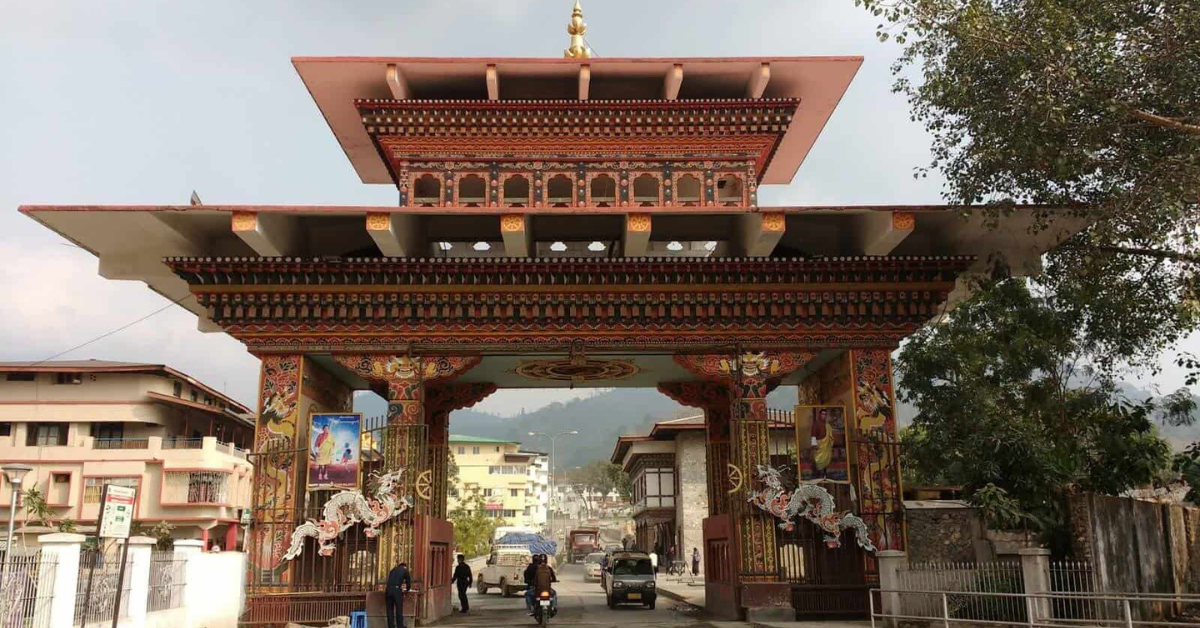
The Bhutan Gate, also known as the Phuentsholing Gate, is a doorway connecting two places. It links the bustling Indian town of Jaigaon in West Bengal with the peaceful border town of Phuentsholing in Bhutan. One would not call it just a Gate; it is a piece of art, an icon of society, and proof of the unique bond between the two nations.
One can see a remarkable change when you pass the Bhutan Gate. When you step onto the Indian side, you see that Jaigaon is alive with crowded marketplaces, honking cars, colorful chaos, and the fast-paced pace of Indian trade.
Within a few meters of entering the gate, one can see a different universe. Bhutan is renowned for its peace, fresh mountain air, well-maintained and orderly streets, and vehicles that stop for pedestrians.
Several travelers commented that this is one of the most beautiful border crossings they have ever experienced. A complete sensory change happens in a few steps, yet the contrast is not simply visual.
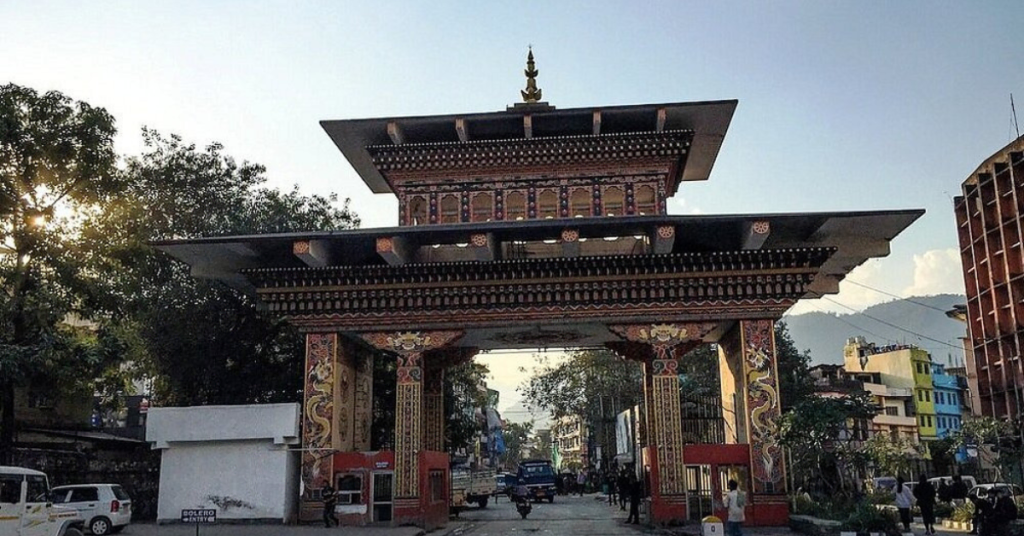
In the early stages of Jaigoan growth, the gateway to Bhutan is where trade and culture collide. The old JP Centre road stood as the town’s commercial heart—a place shaped by trade, tradition, and the steady rhythm of daily life. Its narrow lanes and long-standing establishments bore witness to a border town finding its voice, welcoming travelers and merchants at the gateway of two nations.
Transformation came with time. The New JP Center Road appeared as Jaigaon grew, signifying advancement and contemporary aspirations. The town’s landscape was altered by wider roads, changing infrastructure, and modern areas that connected its history with an eye toward the future. As a result of this development, Jaigaon became an important hub close to the border between India and Bhutan.
The Bhutan Gate represents traditional Bhutanese architecture. It reflects the country’s rich artistic heritage and spiritual beliefs.
Whether you believe in the spiritual significance or are simply a fan of the art, the gate exudes a presence that transcends mere architecture.
The Hotel Vianta is located on the busy NS Road in Jaigoan, where daily life, business, and culture all coexist peacefully. The Bhutan Gate, at the end of the road, is more than just a border; it’s a magnificent threshold where two countries come together rather than part ways. Phuentsholing, Bhutan, a town of serene streets and quiet dignity, is located beyond the gate and provides a tranquil contrast to Jaigaon’s vibrant bustle. When combined, Jaigaon and Phuentsholing create a unique meeting point where the poetry of peace and the pulse of commerce collide.
A: It was constructed around 1961 or 1964. It marks an entry point for the Bhutanese people to enter India and vice versa.
A: Yes, but be respectful.
A: No entry fee to visit the Bhutan Gate.
A: No. You can take photos and explore the gate. However, you need documents to pass through the Gate.
A: No permit needed for photography of the gate from outside.
A: Drones are not permitted in border areas for security reasons.
A: Weapons, drugs, large quantities of commercial goods (for personal use is fine), and items on Bhutan’s restricted import list.
A: Yes, there’s X-ray screening at the Pedestrian Terminal, similar to airport security. It’s a quick process.