Why Bhutan Should Be Your Next Himalayan Escape
There are very few places in the world that feel untouched by chaos, and Bhutan is one of them. Nestled in the Eastern Himalayas, Bhutan is known for its peaceful monasteries, mountain landscapes, rich Buddhist culture, and slow way of life. The moment travelers cross into Bhutan, the atmosphere changes completely – the roads become quieter, the air fresher, and life suddenly feels calmer.
For travelers planning a Bhutan trip from India, Bhutan offers the perfect combination of culture, adventure, relaxation, and scenic beauty. Whether you are exploring the lively streets of Thimphu, trekking toward the iconic Tiger’s Nest in Paro, or simply sitting in a mountain café watching clouds move through the valleys, every moment feels unforgettable. This Bhutan travel guide is designed to help you experience the best places in Bhutan comfortably within 7 days.
Bhutan Travel Overview for First-Time Travelers
Duration
Main Destinations
Best Time to Visit
Ideal For
Starting Point
Travel Style
7 Days
Thimphu & Paro
March–May & September–November
Couples, Families & Solo Travelers
Phuentsholing
Scenic + Cultural + Relaxed
Day 1 - Arrive in Jaigaon & Explore the Border Town
Your Bhutan journey begins in Jaigaon – the vibrant border town located beside Phuentsholing. Most travelers arriving from different parts of India first reach Jaigaon before entering Bhutan. After a long journey, it offers the perfect place to relax, prepare documents, enjoy local food, and experience the excitement of beginning a Himalayan adventure.
1. Check-In & Relax at Hotel Vianta
Travelers looking for comfort and convenience before entering Bhutan often choose Hotel Vianta for its premium rooms, relaxing atmosphere, and easy access to the Bhutan border. Whether traveling with family, friends, or solo, the hotel provides a peaceful stay before your Bhutan road trip begins.
2. Explore Jaigaon Local Market
Spend your evening exploring Jaigaon’s bustling local streets filled with shops, Bhutan travel essentials, cafés, clothing stores, and street food. The border atmosphere creates a unique blend of Indian and Bhutanese culture unlike anywhere else.
3. Dinner at Thazah Kitchen
End your day with a relaxing dining experience at Thazah Kitchen – one of the most popular cafés near the Bhutan border, known for its warm ambiance, cozy interiors, and delicious food.
Things to Do in Jaigaon
- Explore local markets and border bazaars
- Shop for Bhutan travel essentials
- Experience the unique border town nightlife
- Enjoy café hopping along the main street
- Relax before your Bhutan journey begins
Day 2 - Enter Bhutan & Travel to Thimphu
After breakfast, complete immigration formalities at Phuentsholing and begin the scenic road journey toward Thimphu. The drive is one of the most beautiful experiences in Bhutan – winding mountain roads, dense forests, cascading waterfalls, and peaceful river valleys unfolding at every turn. Small roadside cafés offer warm tea, local snacks, and unforgettable views of the landscape. By evening, you arrive in Thimphu – Bhutan’s unique capital where modern cafés and traditional culture coexist beautifully.
Travel Tips
- Start early for better weather and road conditions
- Carry warm clothes – mountain temperatures drop quickly
- Keep water and snacks handy for the journey
- Have your camera ready for scenic viewpoints
Day 3 - Best Things to Do in Thimphu
Thimphu is unlike any other capital city in the world. Instead of towering skyscrapers and heavy traffic, the city offers peaceful monasteries, local markets, scenic viewpoints, and cozy cafés surrounded by mountains.
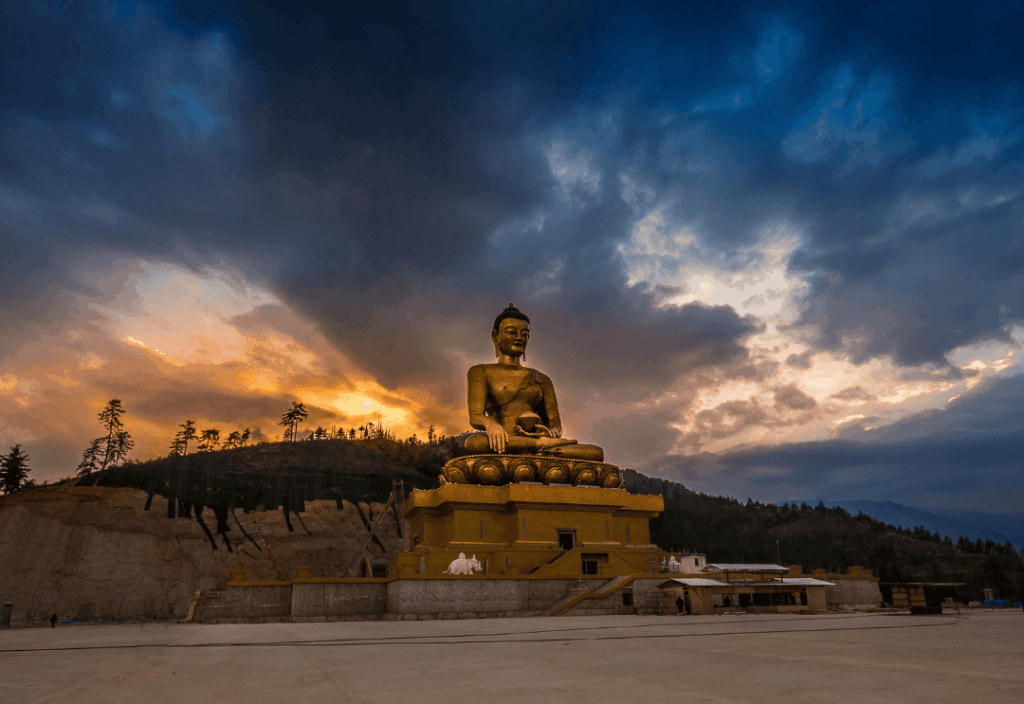
1. Buddha Dordenma
One of the most famous Bhutan tourist attractions – the massive Buddha Dordenma statue overlooks the entire Thimphu valley and offers breathtaking panoramic views of the surrounding mountains.
2. Memorial Chorten
A peaceful spiritual site where locals gather daily for prayer and meditation. This landmark offers an intimate glimpse into Bhutanese Buddhism and daily spiritual life.
3. Clock Tower Square & Takin Preserve
Clock Tower Square is filled with restaurants, cafés, and local shops — perfect for experiencing the modern side of Bhutan. Nearby, the Takin Preserve is home to Bhutan’s unique national animal, the takin, and is a must-visit for wildlife lovers.
Shopping & Souvenirs
- Traditional handicrafts and handwoven textiles
- Handmade Bhutanese art and thangkas
- Prayer wheels and religious artifacts
- Local jewelry and wooden souvenirs
Day 4 - Hidden Places & Local Experiences
Beyond the popular attractions, Thimphu has a quieter, more authentic side that many tourists miss entirely. This day is reserved for slower, deeper exploration of the city’s hidden character.
Discover cozy cafés with mountain views and warm interiors, lesser-known hillside monasteries, peaceful riverside walks, and local artisan workshops where traditional crafts are still made by hand. These hidden places in Bhutan often become the most treasured memories of the entire trip.
Day 5 - Exploring the Beauty of Paro Valley
The scenic journey from Thimphu to Paro introduces you to one of the most beautiful valleys in Bhutan. Surrounded by mountains and traditional Bhutanese homes, Paro feels calm, spiritual, and deeply connected to the natural world.
1. Rinpung Dzong
This iconic fortress monastery is one of Bhutan’s most important cultural landmarks – a masterpiece of traditional Bhutanese architecture set against the valley landscape.
2. Local Markets & Bhutanese Food
Paro’s markets are perfect for shopping traditional Bhutanese products and souvenirs. No travel to Paro is complete without trying the local cuisine:
Ema Datshi
Bhutan's national dish - fiery chillies in creamy local cheese. Bolder than it looks.
Momos
Steamed Himalayan dumplings with seasoned vegetable or meat filling.
Butter Tea
Rich, salty yak butter tea - warming and deeply restorative at altitude.
Red Rice
Nutty, earthy Paro valley grain served at almost every meal.
Day 6 - Trek to Tiger's Nest Monastery
No Bhutan itinerary is complete without visiting Tiger’s Nest Monastery – Paro Taktsang. Located dramatically on a sheer cliffside above the Paro valley, it is one of the most iconic landmarks in Bhutan and one of the most rewarding trekking experiences in the entire Himalayas. The trail winds upward through pine and rhododendron forests, offering incredible panoramic views at every turn. The 2–3 hour ascent is moderate and accessible to most reasonably fit travelers.
Trekking Tips for First-Time Visitors
- Start early – before 7am for the coolest temperatures
- Wear proper trekking shoes with ankle support
- Carry at least 1.5L of water per person
- Dress in layers – weather changes quickly at altitude
- Bring a camera: the viewpoints are extraordinary
Day 7 - Return to Jaigaon & Relax Before Departure
After an unforgettable Bhutan journey, you return to Jaigaon for a relaxing final day before departure. After long mountain roads and high-altitude treks, there’s something deeply satisfying about settling back into comfort before heading home.
1. Relax at Hotel Vianta
Many travelers prefer staying again at Hotel Vianta to unwind comfortably. The premium rooms, peaceful atmosphere, and convenient location make it ideal for one final restful night.
2. One Last Meal at Thazah Kitchen
Before leaving, enjoy a final dining experience at Thazah Kitchen. From flavorful dishes to a warm café ambiance, it becomes the perfect ending to a memorable Bhutan journey. Spend your final evening shopping for souvenirs, exploring local markets, and buying Bhutanese crafts to take home as memories of the mountains.
Bhutan Travel Essentials
Entry Permit
Indian travelers need a valid passport or voter ID, permit documentation, and passport-size photographs. Formalities at Phuentsholing are usually smooth in the morning hours.
Best Season
Spring (March to May) and Autumn (September to November) offer clear skies and the most dramatic mountain views across both Thimphu and Paro.
What to Pack
A calm and secure atmosphere is essential. Guests prefer hotels that provide privacy, safety, and a quiet environment away from unnecessary noise - especially after long border journeys.
Local Etiquette
Dress modestly at monasteries. Remove shoes before entering temples. Maintain silence in spiritual spaces. Avoid littering in this pristine Himalayan environment.
Frequently Asked Questions
Yes, 7 days is perfect for exploring Thimphu and Paro comfortably.
Spring and autumn offer the best weather and mountain views.
Indian travelers can enter Bhutan using either a passport or voter ID.
Both destinations offer different experiences. Thimphu is more cultural and modern, while Paro is scenic and peaceful.
The cost depends on accommodation, transportation, and travel style, but Bhutan can be explored comfortably on both moderate and luxury budgets.